
Collectible graphic
Muted and Warm Color Palettes – Soft pastels, earthy tones, and faded hues create a timeless appeal. These colors evoke warmth and familiarity, giving designs a vintage touch helpforerror.com/sports-betting/washington/. Often, designers use aged effects, such as sepia filters or slightly desaturated tones, to enhance the nostalgic aesthetic.
Going hand in hand with Optical Art is the Kaleidoscopic Patterns trend. Created by twisting a mirrored tube containing colored glass, tinsel, beads fragments and mirrors, these colorful and mesmerizing geometric designs were echoed in art, design and decor all throughout the 1960s, and still remain a trend today – particularly in video and motion design.
Graphic design trends are constantly evolving, but one movement that has been making a strong comeback is nostalgia-inspired design. Retro aesthetics, vintage typography, and classic color palettes are being revived to evoke emotions and create deeper connections with audiences. Whether it’s the bold colors of the ’80s, the grunge textures of the ’90s, or the minimalistic charm of mid-century designs, nostalgia in graphic design is reshaping the industry. This blog explores why nostalgia is so powerful, how it’s influencing modern design, and how businesses can leverage this trend to enhance brand identity.
Considering all of the above elements, it’s also important to remember that retro design itself is retro design. In other words, people have been doing and re-doing the same thing for decades. What about the current popularity of “vintage” design? It certainly isn’t the first time that it has happened.
Cinematic artwork
Another crucial cinematic technique is the use of lighting to convey mood and atmosphere. German Expressionist filmmakers like F.W. Murnau and Fritz Lang employed dramatic lighting and shadows to create a sense of tension and emotional intensity in their films. This approach to lighting significantly influenced painters, who began to experiment with chiaroscuro and other lighting effects to add drama and depth to their compositions.
It features two men standing on the edge of a pier sharing a moment between themselves with a plane flying overhead. The power of the moment can be felt in a cinematic way. You can almost hear the roar of the plane, or the sound of a movie soundtrack punctuating the moment. Small waves are crashing into the sand below and we wonder about what these two men are saying to each other, two private eye’sconversing, perhaps, on a case they are sharing information on.
The significance of this interdisciplinary approach lies in its ability to break down traditional boundaries and foster creativity. By drawing from multiple disciplines, artists can push the limits of their practice and create works that resonate on multiple levels. This fusion of film and painting not only enhances the storytelling potential of visual art but also reflects the increasingly interconnected nature of contemporary culture.
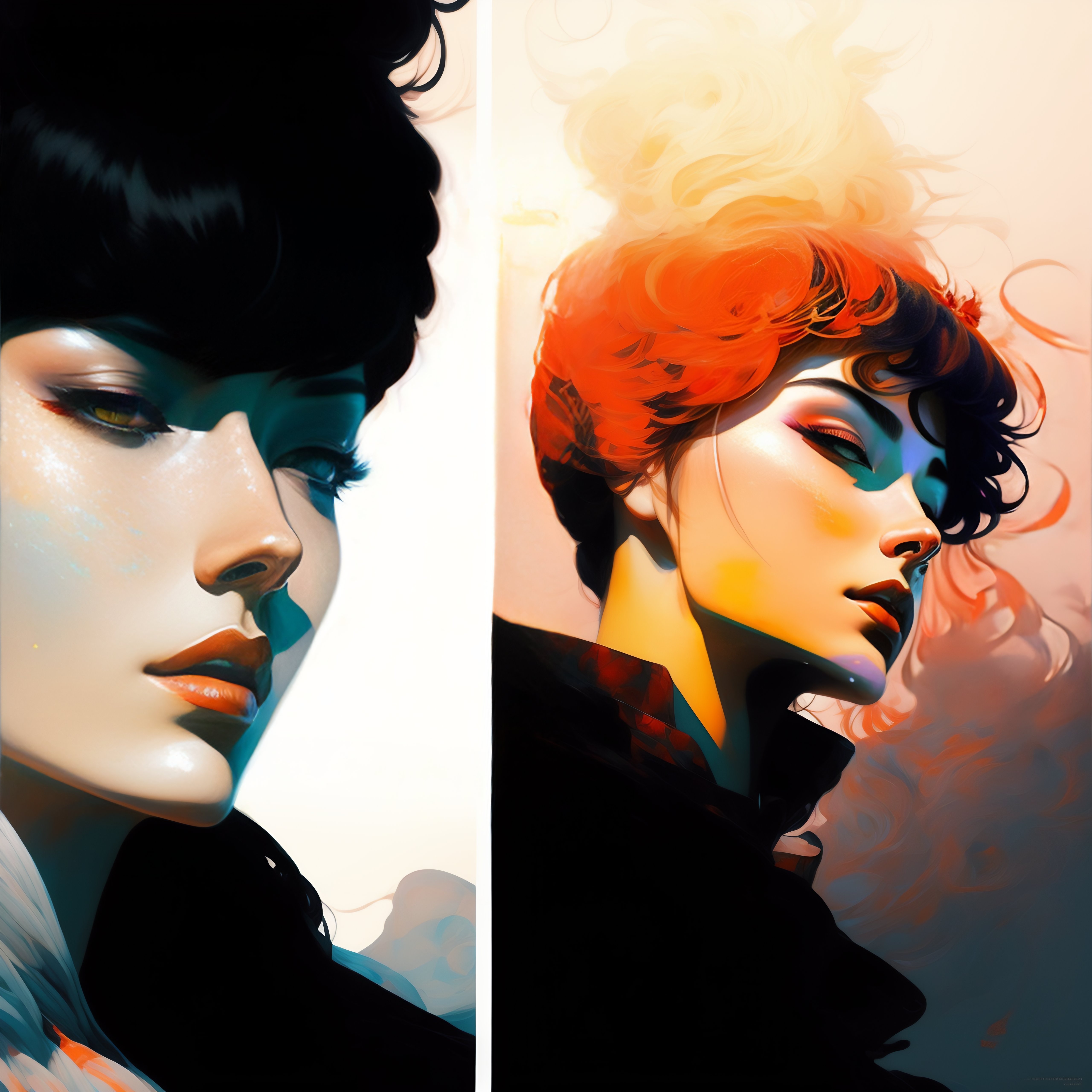
Another crucial cinematic technique is the use of lighting to convey mood and atmosphere. German Expressionist filmmakers like F.W. Murnau and Fritz Lang employed dramatic lighting and shadows to create a sense of tension and emotional intensity in their films. This approach to lighting significantly influenced painters, who began to experiment with chiaroscuro and other lighting effects to add drama and depth to their compositions.
It features two men standing on the edge of a pier sharing a moment between themselves with a plane flying overhead. The power of the moment can be felt in a cinematic way. You can almost hear the roar of the plane, or the sound of a movie soundtrack punctuating the moment. Small waves are crashing into the sand below and we wonder about what these two men are saying to each other, two private eye’sconversing, perhaps, on a case they are sharing information on.
The significance of this interdisciplinary approach lies in its ability to break down traditional boundaries and foster creativity. By drawing from multiple disciplines, artists can push the limits of their practice and create works that resonate on multiple levels. This fusion of film and painting not only enhances the storytelling potential of visual art but also reflects the increasingly interconnected nature of contemporary culture.
Film graphic
Working as a film graphic designer means meeting tight deadlines and delivering projects quickly and efficiently is essential in the film industry. There is a steady stream of graphic projects in various stages, from research, approval, and printing to pickup and delivery. The constant queue requires close attention to ensure they are completed on time.
To become successful in the creative field of graphic designing, you need to find ways to keep yourself motivated. If you are ever feeling a creative block, you need to find inspiration that can help you with your work. The visual storytelling in Julie And Julia is a brilliant outlet to find inspiration and motivation.
Andrew LaSane is a freelance writer from South Carolina currently based in Brooklyn. He has written for Mental Floss, Complex Magazine, and Thrillist. He has a Bachelor’s in American Studies from Skidmore College, and a Masters in Media, Culture, and Communications from NYU. Andrew is a member of a weekly movie trivia team and spends his free time customizing sneakers with pop culture themes. Follow him on Twitter at @laptop_lasane.
Classic artwork
What could be more interesting than a painting of a pipe with words that mean “This is not a pipe”? Rene Magritte tried to prove his point that paintings are a symbol of what they are representing. This is a very creative way to prove the semiotic gap between verbal and visual. This makes the viewer think in-depth about the picture and the relationship our mind creates with the image. The Treachery Of Images has been regarded as one of the most interesting paintings of all time.
It is rumored that she was a last-minute replacement for the model whom Whistler intended to paint on that day. Whistler’s Mother, number 53 on the list of the most famous paintings of all time, is regularly exhibited at museums around the world but is the property of Musee d’Orsay.
Manet’s scene of picnicking Parisians caused a scandal when it debuted at the Salon des Refusés, the alternative exhibition made up of works rejected by the jurors of the annual Salon—the official art exhibition of the Académie des Beaux-Arts that set artistic standards in France. The most vociferous objections to Manet’s work centered on the depiction of a nude woman in the company of men dressed in contemporary clothes. Based on motifs borrowed from such Renaissance greats as Raphael and Giorgione, Le Déjeuner was a cheeky send up of classical figuration—an insolent mash-up of modern life and painting tradition.
This is one of the best paintings of Edouard Manet and also one of his last major works. Putting his creativity to best use, the artist represents the bustling ambiance of significant cabarets and music halls of Paris in this painting. Manet used a real barmaid as a model to complete his artwork.
Part of Gustav Klimt’s golden phase focused on allegorical themes, this Symbolist painting fuses Egyptian, Christian, and Asian styles with contemporary Art Nouveau. Against an aureate background evoking eternity, figures float dreamily amid the gnarled tree with meanings left open-ended. The Tree’s touchpoint between past myth and desire for renewal captured widespread hopes and anxieties around the shifting cultural landscape of early 20th century Vienna.